

The GIA conference is a highlight of my year, so I confess to some “post-event blues” when I first got home, coming off the energy of gathering, learning, and strategizing with partners, members, and friends.
Our theme was “Branch Out” and I’m proud that we did; one third of our 237 attendees were with us for the first time. Now, as we survey the ongoing policy threats to the social safety net, “Branch Out” is a call to action.
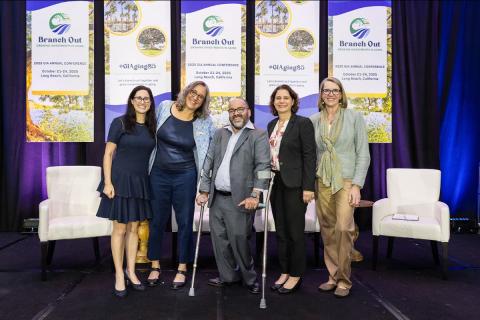
Our opening panel plenary was a first step in strengthening ties with the disability community.
Disability is a reality that many of us will face, but often deny, as we get older This recent New York Times headline says it all: Wheelchair? Yes. Hearing Aids? Yes. ‘Disabled’? No Way. In the United States, if we live past 70, we can expect some kind of disability for an average of 8 years. Whether it’s from a chronic condition, an unexpected illness, or an accident, many of us are very quietly “aging into disability.” But our silence, often rooted in internalized ableism, perpetuates injustice and inaccessibility for all.
For others – people who have been living with a disability for a long time, the challenge is “aging with disability.” About half of people living with a disability are 65+. Many develop additional aging-related disabilities, at younger ages. For example, people with Down syndrome have a 90% lifetime risk of dementia, usually acquired before age 65.
Regardless of whether we’re “aging into” or “aging with,” eight out of ten of us will need some kind of assistance meeting our basic needs (aka “long-term services and supports”). And despite the common but false philanthropic binary (“We fund aging but not disability” and the flipside: “We don’t fund aging because we fund disability”), greater alignment between aging and disability funding and advocacy will mobilize more people, with more power, to demand and design the dignified later life we all deserve.
Leading By Example
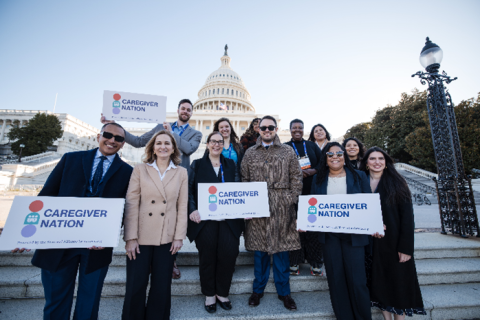
At the Caregiver Nation Summit in Washington, DC, and CareFest back in NYC, hosted by our partners the National Alliance for Caregiving and Caring Across Generations, respectively, I felt inspired by those leading the fight against later life challenges and disparities through their own courageous storytelling.
Senator Andy Kim of New Jersey talked about how his experience balancing caregiving for his ailing father and his young children influences his work legislating and policymaking. Former Secretary of State and Senator Hillary Clinton remarked that “It shouldn’t have to be this hard to support the human needs that everyone has.” She recalled the struggle to pass the Family and Medical Leave Act (FMLA) in 1993. President George H. W. Bush had vetoed a version of it twice, yet signing it became an early signature of President Bill Clinton’s first term.
What made the difference, according to Secretary Clinton? Storytelling.
And 32 years later, we need stories more than ever. Check out Michelle Cottle’s story ‘We had no idea what was coming’ Caring for my aging father’ in the November 24th Opinion Section of the New York Times. If you’re feeling inspired, depressed, angry, or (insert feeling here), you can tell your story directly to the Times (scroll to the end of the page).
The Aging Advocacy Fund
We’re not all comfortable talking about our own experiences, so there are other ways to help. Last month, GIA announced our new Aging Advocacy Fund to elevate aging within policymaking and budgeting at every level of government.
With founding support from Next50, Archstone Foundation, RRF Foundation for Aging, Congregational Home Legacy Fund, and Research to Prevent Blindness, GIA is working to raise $1 million to ignite, strengthen, and align aging advocacy across the United States, activating people of all ages to fight for a system that provides long-term supports without impoverishing care recipients or exploiting care workers.
If you’re a GIA member, you will see an opportunity to contribute in your recent dues invoice, and I hope you will consider participating.
Telling our stories. Branching out. Building our community. These practices are about more than feeling good; they are some of our most powerful strategies in challenging times.