

When GIA was approached about becoming a project partner on the forthcoming PBS documentary Caregiving, it was an easy “yes.”
Caregiving is a GIA priority. PBS is the perfect venue. We were in great company (other partners include the Rosalynn Carter Institute for Caregivers, the Milken Institute Center for the Future of Aging, the Global Coalition on Aging, Lutheran Services in America, and the National Alliance for Caregiving.) The Ralph C. Wilson Jr. Foundation is a program funder, and The John A. Hartford Foundation is supporting engagement and outreach.
Did I mention Bradley Cooper?
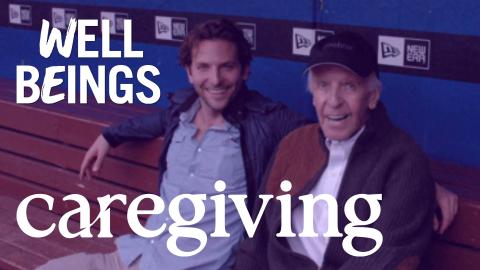
Yes, Bradley Cooper the actor/movie star, who is an executive producer of the film and is featured, because he loved and idolized his father and became his caregiver when he was dying of lung cancer.
“I used to dress up as him as a kid, in kindergarten, and get made fun of because I wanted to wear a suit and a tie,” Cooper recalls in the trailer.
“To go from that to giving him a bath is quite a traumatic thing.”
I can’t wait to see this film (coming in 2025.) I’m grateful to Bradley (aging doesn’t make The Hollywood Reporter every day). I view caregiving as a fundamental need. And I believe the care economy should be on the radar of all funders because of how profoundly it intersects everything from health and disability to women’s rights and social and racial justice.
But caregiving is also resonating for another reason: it is deeply personal. From hard-to-impress CNN and Entertainment Tonight producers who wrote back effusively when they were pitched about the documentary (“A wonderful undertaking”), to the many people who shared and commented on GIA’s LinkedIn post, everyone has a caregiving story, often a tough one.
“As a former caregiver to my now deceased parents, the experience was the most traumatic, perplexing, yet engaging and soul-defining time period (so far) in my 72-year life,” wrote one commenter.
Caregiving can be “traumatic and perplexing” because of how surprisingly difficult and expensive it is.
Research shows that most people operate under the assumption that Medicare will deliver and pay for long-term care, which, if we live past 65, 70 percent of us will need.
Belief in the “Medicare Fairy” prevents people from planning and saving for later life.
But just as our children eventually learn that the Tooth Fairy is actually US (and I have a great story about that - ask me in Detroit), there comes a day when we all arrive at the horrifying realization that the Medicare Fairy is… ALSO US.
Medicare does not pay for long-term care, and most care is provided by friends and family, often at the expense of the caregiver’s health, wellbeing, and financial security.
So many people are suffering privately. I hope this film helps drive action toward a more sustainable caregiving infrastructure where caregivers are fully seen, valued, and supported.