

The privilege of being a funder means being on the receiving end of a lot of requests - for money, but also for advice, access, recommendations, no-cost extensions, and more. This is familiar territory. What comes less naturally to many of us is doing the asking ourselves. But with the 2024 re-authorization of the Older Americans Act (OAA) coming up, we have a unique opportunity - and responsibility - to start asking.
Retreat to advance our goals
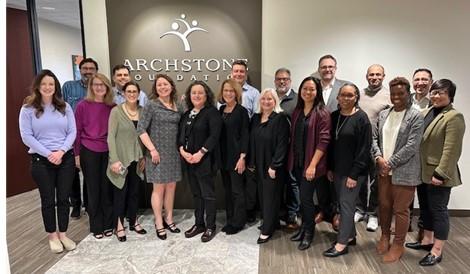
At our recent Board retreat, we affirmed, for the first time, three specific policy priorities for 2024: the RAISE Family Caregivers Act, federal and state-based Multisector Plans for Aging, and, of course, the OAA.
The OAA is a government program, but as aging funders, we need to reframe it as a lifeline for older people, and the aging network that it supports as our most successful public-private partnership. Many GIA members support this critical network and, like many of you, I discovered my passion for aging while working in an OAA-funded program.
Champions act
Here’s how we’ve begun pursuing our priorities. In partnership with Grantmakers In Health (GIH), GIA launched the Champion Fund (details here), to use the unique perspective of our sector to advocate for the OAA. We are still seeking contributions (please contact me directly to discuss!) but the work is already going strong.
Recently, GIA and GIH shared our priorities with the Senate HELP Committee. We were not shy: we call for doubling OAA funding, authorizing and funding a White House Conference on Aging, action on key legislation (the Strategic Plan for Aging Act, to support states working on Multisector Plans for Aging, and the Supporting our Direct Care Workforce and Family Caregivers Act), as well as re-authorization of the RAISE Family Caregivers Act of 2017. Other priorities include addressing social isolation, promoting equity for rural populations, and optimizing public-private partnerships. Read the whole letter here.
The OAA is popular, widely seen as a model of bipartisan cooperation and effectiveness. The Administration for Community Living (ACL) estimates that each $1 Congress spends on OAA services and programs leverages an additional $3-4 from other funding sources. Demand for these services has dramatically increased since the Act was signed in 1965 but federal funding has not kept pace.
Supporting your advocacy
So we're heading to DC to speak out for the Older Americans Act. Join us at NCOA’s Age + Action conference (May 6-8). We know it's not always clear what you are allowed to do if your organization is a 501c3. GIA is here to help. We're new to this, too! So we've called in some experts to help us prepare for Hill visits and other interactions with policymakers and elected officials:
- Advocacy for the Older Americans Act Reauthorization: What Can My 501c3 Foundation Do? A virtual workshop co-sponsored by GIA and GIH in partnership with the Alliance for Justice’s Bolder Advocacy program. Thursday, April 4, from 1:00 – 2:30 pm ET.
- Peer Exchange: How and Why to Participate in NCOA’s Hill Day. Webinar: Wednesday, March 27, 2024 at 2 pm ET. Register here (free account required)
- NCOA Connect: Hill Visits Explored and Ready for Activation at the 2024 Age + Action Conference. Webinar; Wednesday, April 17 at 2 pm ET. Register here.
- Positive, Inclusive Aging Policymaking and the Role of Policymakers. Recorded NCOA webinar. Register here.
When we work collaboratively and creatively with government, there is unmatched potential for impact and benefits for older people. It’s why GIA has welcomed public offices such as the ACL and AmeriCorps Seniors, and mainstays of the aging network such as Meals on Wheels America, USAging, and National Council on Aging (NCOA), as members.
At GIA, we’re mobilizing money and ideas to strengthen policies, programs, and resources for all of us as we age. The OAA is an important touchstone for all those things, so let’s start asking.